Advertisement
The line between industries keeps blurring. In a surprising shift, a blockchain firm has entered the robot manufacturing space. This isn’t about coins or NFTs anymore—it’s a serious move into industrial hardware. The company, once known for handling decentralized ledgers and smart contracts, is now building physical robots that operate in factories, warehouses, and logistics hubs.
The pivot might seem random at first glance, but there’s a clear logic to it. This shift signals something bigger than just diversification—it hints at the merging of two once-separate worlds: blockchain infrastructure and AI-driven automation.
It might seem like a leap from software to machines, but the underlying motivations make sense. Blockchain's primary strength is transparency, immutability, and secure decentralized data handling. These traits are now being mapped onto the robot supply chain. The blockchain firm isn't just building robots; it's embedding traceability into its components. Every servo, chip, and module added to each robot has a digital trail. That way, when a robot arm breaks down in a factory, engineers can trace the exact batch of parts, who assembled it, and when it was installed, without relying on paperwork or siloed databases.
This isn't the company’s first AI-related move. They previously worked on AI governance models and smart contract protocols tied to machine learning outcomes. So there’s groundwork here—what they’re doing now is physicalizing the digital. The robots themselves are designed for automation tasks, but their management is powered by blockchain. Identity, task histories, maintenance cycles, and performance thresholds are all recorded to a chain, leaving an auditable record for every unit. Industrially, this decreases downtime, contention, and warranty claims.
There's another layer too: secure coordination. These robots will eventually be able to interact and coordinate with each other using blockchain-based consensus. For example, if one warehouse robot is running low on battery, it can request assistance from another. Instead of relying on a central controller, they'll agree on actions based on a shared ledger. It's not just about smart machines—it's about smarter cooperation without central bottlenecks.
Robot manufacturing isn't just about building machines; it's about handling complexity at scale. Modern robotics involves suppliers across different regions, each contributing specific components, including lithium batteries, vision systems, gyroscopes, metal chassis, and microcontrollers. When a blockchain firm enters this process, it changes how this entire supply chain is tracked and managed. The ledger becomes a living document, recording the journey of each part from fabrication to integration.
In typical manufacturing, data sits in silos. If a sensor fails, determining its origin—and whether others from the same batch are faulty—can take days. By embedding blockchain into the robot manufacturing process, tracing that issue takes minutes. And the audit trail can't be altered. This has significant implications for safety-critical applications, such as autonomous delivery robots or industrial arms operating in close proximity to people.
Another key aspect is software version control. These robots will regularly receive AI updates, including new models, refined control loops, or improved obstacle detection algorithms. Tracking which firmware version was deployed, who approved it, and whether it was tested before going live is no small job. With blockchain infrastructure, every version change is logged automatically. It's a passive audit system that works without relying on engineers to remember every step.
Smart contracts are also being tied into hardware maintenance. When a robot reaches a certain number of operating hours or its performance drops below a specified level, contracts are automatically triggered, prompting a service request or alerting the logistics system. No human input needed. These are not just machines—they're part of a self-reporting ecosystem.
The integration of AI in robot manufacturing isn’t new. What’s different is how it’s governed. AI automation often depends on massive centralized platforms—cloud servers, decision trees, neural nets trained off-site. But this blockchain firm is pushing for decentralized intelligence. Each robot stores its data and makes local decisions using onboard AI models, while syncing key insights across the ledger.

This cuts latency and removes the single point of failure. A factory with hundreds of robots doesn’t send every decision to the cloud for processing. Instead, robots act locally and record outcomes globally. The system learns efficiently. One robot’s successful pathfinding maneuver is logged, and another can retrieve and reuse it almost instantly.
The company is also testing collective learning. Rather than uploading data to train a global model, robots use federated learning: each trains a small AI model on its environment, shares only the trained weights via a blockchain, and builds a growing, self-improving intelligence without sharing raw data. It's privacy-preserving, fast, and efficient.
All this depends on reliable data handling, where blockchain acts as a safety net. If a bad update is released or a batch of parts has a flaw, blockchain serves as a versioned forensic logbook. The company claims this transparency can cut robotics project delays by up to 40%.
This is happening on a small scale. Robots are being tested in logistics—sorting packages, managing stock, lifting payloads, and restocking shelves. These aren’t humanoid, just utility machines doing repetitive tasks. But the bigger picture is what they represent: the start of a hybrid infrastructure where robots are built, deployed, and operated on a decentralized backbone.
There’s talk of licensing the platform to other robotics manufacturers, especially those struggling with supply chain bottlenecks and audit compliance. The blockchain firm isn’t trying to become Boston Dynamics—it’s positioning itself as a backbone provider. Robot manufacturing is just a surface move; what’s really happening is the integration of blockchain into the mechanical world.
For AI, this could spark more collaboration between robotics teams and blockchain developers. There’s always been tension between speed and safety—move too fast and risk failure; go too slow and miss the market. With automated traceability and decentralized coordination, it’s possible to scale faster without cutting corners.
If effective, this model could expand to agriculture, construction, and public transit maintenance—anywhere machines face unpredictable environments and need constant updates, oversight, and coordination.
Blockchain in robot manufacturing signals a shift toward data-driven, decentralized ecosystems. Industries may move beyond software-hardware divides, focusing on shared data, trust, and self-improvement. AI could gain more accountable systems, while robotics might streamline maintenance and operations without cumbersome backend work. Companies may reduce reliance on central vendors, letting robots manage their records and identities. This approach could reshape maintenance, security, and collaboration strategies, making blockchain's role not just innovative but a strategic model others may follow.
Advertisement

How the hill climbing algorithm in AI works, its different types, strengths, and weaknesses. Discover how this local search algorithm solves complex problems using a simple approach

Why is Alibaba focusing on generative AI over quantum computing? From real-world applications to faster returns, here are eight reasons shaping their strategy today

Llama 3.2 brings local performance and vision support to your device. Faster responses, offline access, and image understanding—all without relying on the cloud

Learn the top eight impacts of global privacy laws on small businesses and what they mean for your data security in 2025.

How AI is shaping the 2025 Masters Tournament with IBM’s enhanced features and how Meta’s Llama 4 models are redefining open-source innovation

Sisense adds an embeddable chatbot, enhancing generative AI with smarter, more secure, and accessible analytics for all teams

If you want to assure long-term stability and need a cost-effective solution, then think of building your own GenAI applications
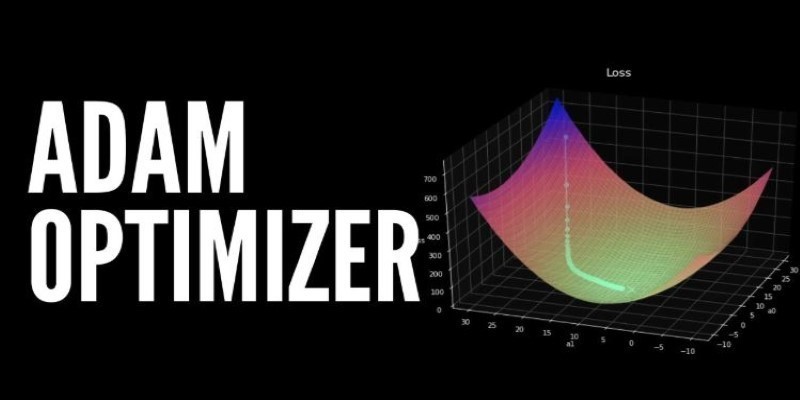
How the Adam optimizer works and how to fine-tune its parameters in PyTorch for more stable and efficient training across deep learning models

Learn key differences between RPA and BPM to enhance workflow automation strategy and boost enterprise process efficiency

How Amazon is using AI to fight fraud across its marketplace. Learn how AI-driven systems detect fake sellers, suspicious transactions, and refund scams to enhance Amazon fraud prevention

What Amazon Bedrock is and how AWS’s generative AI service helps businesses access powerful foundation models, customize AI applications, and simplify integration through a single platform

How Orca LLM challenges the traditional scale-based AI model approach by using explanation tuning to improve reasoning, accuracy, and transparency in responses