Advertisement
For many years, Google has been engaged in quantum computing research. The company believes quantum systems can solve problems that conventional computers cannot. Google has advanced toward designs that are more scalable and robust with its new Willow chip. Willow is more reliable than previous prototypes. It also aids in better control of quantum errors. It's a big step toward real-world applications, according to industry experts.
Researchers and businesses are keen to investigate novel use cases. Many anticipate advances in industries like finance, logistics, and materials science. Willow's design demonstrates Google's commitment to long-term quantum research. The company's immediate goal is quantum advantage, and Willow is part of that path. The chip has the potential to revolutionize the computing industry.

The Willow chip from Google is a significant advancement in sophisticated quantum hardware. Robustness, error management, and increased efficiency were the primary concerns of the engineers. In the majority of machines, quantum bits, or qubits, frequently lose coherence rapidly. With improved material design and layout innovations, Willow lessens these problems. The chip's structure boosts performance while reducing noise interference.
Researchers see it as a step forward in resolving long-standing consistency issues. Experiments that were previously impossible are now possible due to improved chip quality. Google prioritizes real-world usability over laboratory experiments. Theory and applied research objectives are balanced in the design. The chip strives for low error rates as it scales. According to experts, this could soon enable quantum computing to achieve new levels of accuracy.
Qubit resilience is one of the most difficult problems in quantum computing. Both design flaws and environmental interference cause disruptions. Willow improves chip architecture and material quality to address these faults. Engineers enhanced shielding and calibration to protect sensitive qubits. Qubits remain consistent for longer as a result. Lower inaccuracy rates translate into more precise computations and dependable results.
These machines can be relied upon by researchers and businesses to solve practical problems. Smaller fault margins also decrease the computational resources required. Efficiency is increased without requiring significant hardware expansion. Many scientists view Willow as a useful step toward fault-tolerant systems. Improved error control brings quantum computing one step closer to widespread adoption.
Willow's enhanced processing power allows it to influence several fields. It can be used for sophisticated simulations by researchers looking into molecular interactions. These simulations accelerate the process of developing new medications and materials. Financial businesses can analyze risk models more accurately. Logistics firms can utilize quantum-level computations to optimize their routes. With Willow's power, climate scientists could more accurately model weather patterns.
Additionally, the chip supports new AI training techniques with improved optimization. Complex optimization tasks can be solved more quickly. The energy sector could use quantum modeling techniques to design efficient grids. Governments can also use Willow to protect data using more robust cryptography. As quantum machines become more dependable and scalable in real-world applications, each field gains.
Research on quantum computing is competitive among the world's top tech companies. Intel, Microsoft, and IBM are developing their own distinctive chip designs. Many businesses focus on rapidly increasing the number of qubits. But with Willow's enhanced reliability strategy, Google places a higher priority on stability. Willow might not yet have the most qubits. However, it performs better in terms of error reduction.
Experts contend that consistent performance is more important than just the number of qubits. Google is positioned differently from its rivals thanks to Willow's distinctive design. While some investigate trapped ions, IBM focuses on superconducting qubits. Depending on the use case, each approach has its strengths and limitations. Willow from Google strikes a compromise between scalability and quality. According to observers, this gives it a competitive edge for future adoption.
Despite Willow's advancements, widespread adoption still faces obstacles. Building quantum systems is still very costly and complex today. Researchers require more effective cooling systems to preserve quantum conditions. One major obstacle is scaling chips without making them more unstable. Additionally, software development for quantum hardware is not keeping pace with the advancements in hardware.
There are still numerous experimental algorithms that require improvement. There are currently no established industry-wide standards for quantum security. Businesses must address integration issues before implementing the solution on a wide scale. High infrastructure costs discourage smaller businesses from early adoption. For advancement, Google will need to work with international partners. Willow shows promise, but it will take years of research and development before it can be fully implemented.

Willow offers a glimpse into the future's systems. Google intends to extend its studies to more extensive qubit networks. The ultimate research goal is to develop fault-tolerant and scalable systems. Future improvements include hybrid systems that combine quantum and classical power. When applications mature, industries are eager to invest.
Testing theories on more powerful machines will help labs and universities. Willow also plays a part in the worldwide competition for quantum advantage. The chip could drive innovation in fields ranging from healthcare to space exploration. With every advancement, quantum computing gets closer to being widely used. Google's work with Willow could lead to new technological revolutions in the world.
The robustness and efficiency of Google's Willow quantum computing chip are improving. It illustrates the progress made in hardware research. Willow reduces errors, enhances dependability, and facilitates real-world experiments across various domains. Businesses and researchers see considerable potential in implementing such technology. Experts concur that dependability is more important than the number of qubits or speed. Willow is positioned as a foundation for future systems by Google's long-term strategy. In the coming years, quantum computing is expected to undergo a revolutionary transformation. Willow may play a key role in making that future possible.
Advertisement

Beginner's guide to extracting map boundaries with GeoPandas. Learn data loading, visualization, and error fixes step by step

How Hugging Face Accelerate works with FSDP and DeepSpeed to streamline large-scale model training. Learn the differences, strengths, and real-world use cases of each backend

Explore the top 11 generative AI startups making waves in 2025. From language models and code assistants to 3D tools and brand-safe content, these companies are changing how we create
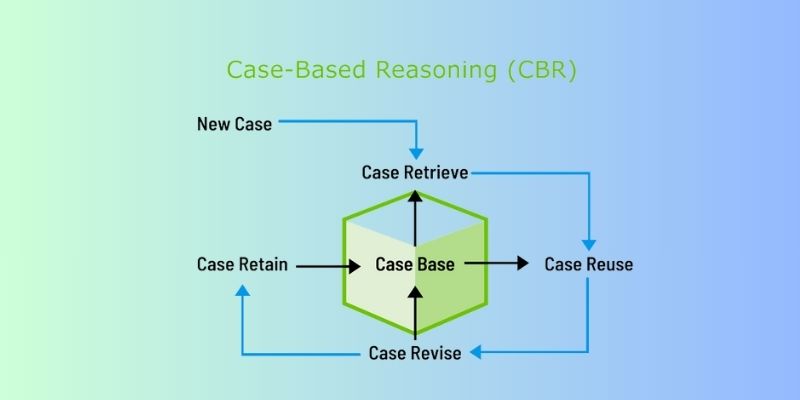
Discover how Case-Based Reasoning (CBR) helps AI systems solve problems by learning from past cases. A beginner-friendly guide

How vision language models transform AI with better accuracy, faster processing, and stronger real-world understanding. Learn why these models matter today

Know how to reduce algorithmic bias in AI systems through ethical design, fair data, transparency, accountability, and more

How the EV charging industry is leveraging AI to optimize smart meter data, predict demand, enhance efficiency, and support a smarter, more sustainable energy grid

How using Hugging Face + PyCharm together simplifies model training, dataset handling, and debugging in machine learning projects with transformers

Microsoft’s in-house Maia 100 and Cobalt CPU mark a strategic shift in AI and cloud infrastructure. Learn how these custom chips power Azure services with better performance and control

A company developing AI-powered humanoid robots has raised $350 million to scale production and refine its technology, marking a major step forward in humanoid robotics

How the hill climbing algorithm in AI works, its different types, strengths, and weaknesses. Discover how this local search algorithm solves complex problems using a simple approach

How the Adam optimizer works and how to fine-tune its parameters in PyTorch for more stable and efficient training across deep learning models