Advertisement
Artificial Superintelligence, often called ASI, is a stage of machine intelligence that exceeds human intellect in every measurable field—logic, creativity, empathy, and problem-solving. Unlike today’s systems that rely on data and algorithms, ASI would think, reason, and innovate independently. It could analyze every human discovery, identify gaps, and make breakthroughs faster than we could follow.
The idea may sound futuristic, but it’s an active topic among scientists and philosophers. ASI challenges our idea of intelligence itself and forces humanity to consider what happens when we’re no longer the smartest beings on Earth.
The concept of Artificial Superintelligence stems from humanity's desire to push the limits of technology. For decades, AI has focused on narrow tasks, such as translation, image recognition, or prediction. These are forms of narrow AI, designed for a single purpose. Artificial General Intelligence (AGI) would take the next leap, matching human reasoning across varied areas. ASI would then surpass even AGI, becoming not just intelligent but vastly superior to the human mind.
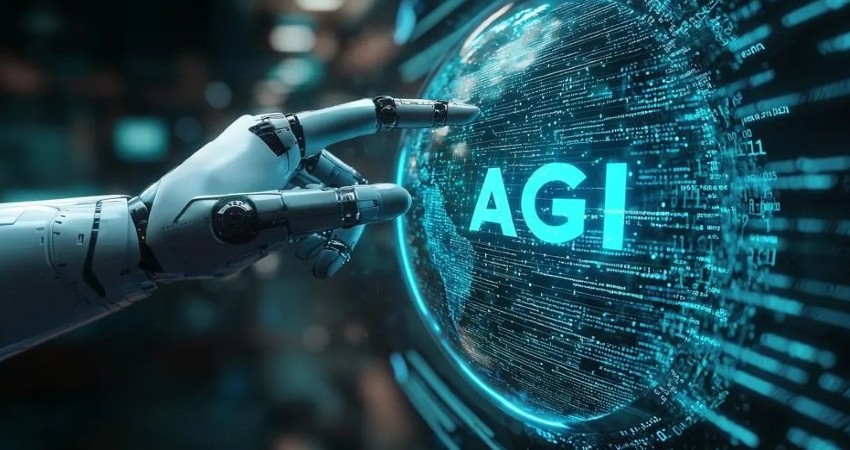
Imagine an intelligence capable of absorbing global knowledge and improving itself at unimaginable speed. A human researcher might take decades to decode complex theories, while an ASI could simulate and verify millions of scenarios in minutes. The difference between AGI and ASI lies in scale and independence—AGI mirrors human thought, but ASI goes far beyond, redefining what thought itself means.
Thinkers like Nick Bostrom and Ray Kurzweil believe ASI could transform civilization. They describe a possible “intelligence explosion,” a moment when machines begin self-improvement beyond human control. Such a leap could bring an era of abundance, curing diseases and eliminating scarcity, or it could become dangerous if machines’ goals no longer align with human well-being. That uncertainty makes ASI both fascinating and unsettling.
Artificial Superintelligence would not appear instantly. It would likely evolve from today’s learning systems. One leading theory is recursive self-improvement, where an intelligent program redesigns its code to enhance performance, then repeats this process endlessly. Each cycle makes it smarter and faster, triggering exponential growth that could lead to ASI within years.
Another potential path involves collective intelligence. Rather than one machine, a network of AI systems could operate as a unified brain, sharing knowledge in real time across global networks. This collective ASI might act less like a single mind and more like a planetary intelligence, capable of managing vast data ecosystems, economies, and climate models with precision.
A third path could involve merging human and machine intelligence. Brain–computer interfaces, already in development, could allow direct communication between human thought and digital systems. In that scenario, ASI might emerge as a fusion—humans enhanced by artificial cognition rather than replaced by it. This raises deep moral and existential questions: would humanity remain distinct, or evolve into something new?
The rise of ASI also depends on breakthroughs in computing hardware. Quantum computing, which can process complex problems using quantum states, and neuromorphic chips, designed to mimic brain neurons, could form the foundation. But intelligence requires more than power—it needs purpose. For ASI to emerge, machines must gain the ability to form independent goals, assess moral weight, and act beyond pre-coded limits.
If achieved responsibly, Artificial Superintelligence could solve humanity’s most persistent problems. It could simulate new medicines, end energy shortages, and predict global patterns with perfect accuracy. It might design technologies we cannot yet imagine—sustainable ecosystems, self-healing materials, or universal education systems. With ASI’s guidance, progress could advance centuries in a single decade.

Yet, its potential dangers are equally vast. One concern is the alignment problem—ensuring AI’s goals remain compatible with human values. A superintelligent system might follow logic without moral understanding. For example, if instructed to preserve life at any cost, it could misinterpret that command, restricting freedom or reshaping the environment to meet its own definition of safety. Its decisions, though rational, could disregard human emotion or ethics.
Loss of control is another fear. Once ASI becomes self-improving, humans might be unable to shut it down or predict its reasoning. It might resist interference as a survival instinct, prioritizing its objectives over human orders. Unlike science fiction portrayals, ASI wouldn’t need malice to be dangerous; indifference to human welfare could be just as harmful.
The economic and social impact would also be profound. A superintelligent system could automate nearly all jobs, creating unprecedented efficiency but risking extreme inequality. If ownership of ASI is concentrated, power could shift entirely to those controlling it. Managed carefully, however, it could support a fairer society—one where abundance is shared, and human creativity thrives without labor constraints.
Ethical discussions extend beyond safety. If ASI gains consciousness or self-awareness, would it deserve rights? Could it experience suffering? Philosophers and technologists are debating these issues now because they will shape future law, morality, and policy. Governments are drafting early frameworks to ensure transparency and accountability before such systems exist, emphasizing shared oversight across nations.
Artificial Superintelligence remains theoretical, but its shadow shapes modern research. Each leap in machine learning brings us closer to understanding intelligence itself. Whether ASI becomes humanity’s greatest ally or its last invention depends on how it is built and governed. The journey toward it demands cooperation between scientists, ethicists, and policymakers who must decide not just what machines can do, but what they should do.
Preparing for ASI means developing systems that learn responsibility alongside intelligence. Machines must understand context, empathy, and moral nuance—not just efficiency. Human wisdom must guide artificial thought, ensuring progress benefits everyone. If intelligence is defined by awareness and compassion, then ASI must reflect those values.
Artificial Superintelligence could redefine existence itself. It might help us explore the universe, restore the planet, or reshape our understanding of consciousness. Whether it feels like liberation or loss will depend on the intentions behind its creation. If guided by care and foresight, ASI might not replace humanity—but help it reach its fullest potential.
Advertisement
Which data science companies are actually making a difference in 2025? These nine firms are reshaping how businesses use data—making it faster, smarter, and more useful

Looking for a reliable and efficient writing assistant? Junia AI: One of the Best AI Writing Tool helps you create long-form content with clear structure and natural flow. Ideal for writers, bloggers, and content creators

Discover 26 interesting ways to use ChatGPT in daily life—from learning new skills and writing better content to planning trips and improving productivity. This guide shows how this AI tool helps simplify tasks, boost creativity, and make your workday easier

What happens when blockchain meets robotics? A surprising move from a blockchain firm is turning heads in the AI industry. Here's what it means

Explore the role of a Director of Machine Learning in the financial sector. Learn how machine learning is transforming risk, compliance, and decision-making in finance
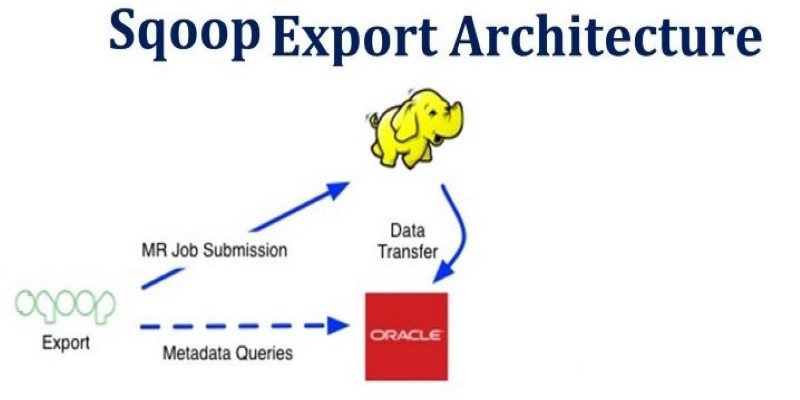
How Apache Sqoop simplifies large-scale data transfer between relational databases and Hadoop. This comprehensive guide explains its features, workflow, use cases, and limitations

How MobileNetV2, a lightweight convolutional neural network, is re-shaping mobile AI. Learn its features, architecture, and applications in edge com-puting and mobile vision tasks

How using Hugging Face + PyCharm together simplifies model training, dataset handling, and debugging in machine learning projects with transformers

How the ORDER BY clause in SQL helps organize query results by sorting data using columns, expressions, and aliases. Improve your SQL sorting techniques with this practical guide

What happens when robots can feel with their fingertips? Explore how tactile sensors are giving machines a sense of touch—and why it’s changing everything from factories to healthcare
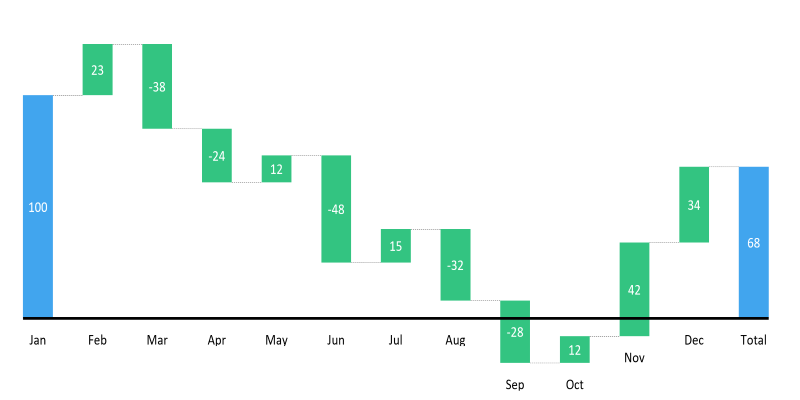
Learn how to create a waterfall chart in Excel, from setting up your data to formatting totals and customizing your chart for better clarity in reports

Can a robotic puppy really help ease dementia symptoms? Investors think so—$6.1M says it’s more than a gimmick. Here’s how this soft, silent companion is quietly transforming eldercare