Advertisement
GPT, a generative pre-trained transformer, has reshaped artificial intelligence by utilizing a single-decoder framework. The goal of GPT is to predict the subsequent word in a sequence, in contrast to previous models. This straightforward but effective method produces text that seems organic and human. Experts and organizations use it to complete tasks quickly and effectively. GPT provides countless opportunities for writing and coding.
Understanding how GPT operates makes it easier to recognize its differences from previous techniques. Its decoder-focused framework represents a significant advancement in contemporary AI, not merely a theoretical concept. We can understand why GPT differs from conventional systems by examining how it operates. This single-decoder setup is now considered revolutionary. It explains why GPT is both redefining and impactful.
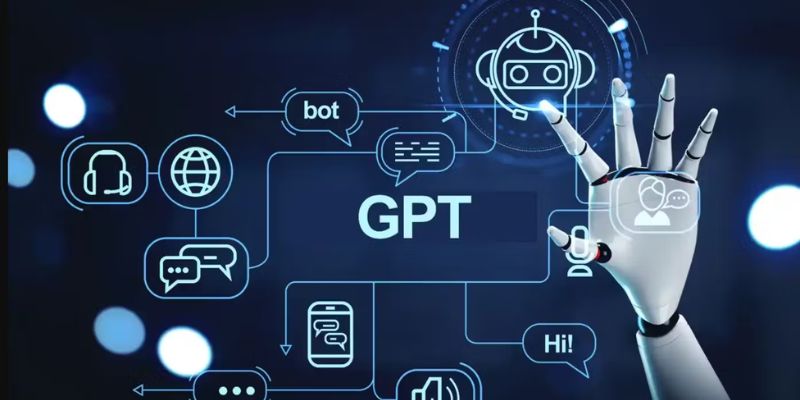
GPT is based on the transformer framework but focuses solely on the decoder. Initially, the encoder-decoder model was applied to machine translation tasks. The encoder is eliminated in GPT, allowing the decoder to handle sequences directly. The decoder captures word relationships through self-attention. Each token influences the prediction of the subsequent token in the input sequence.
GPT can produce lengthy and cohesive text passages thanks to this design. Faster training and simpler scaling for various tasks are further benefits of a simpler architecture. GPT achieves flexibility and efficiency by concentrating solely on the decoder. This model can handle a variety of domains without requiring retraining, according to researchers. GPT's decoder-centered framework has emerged as its key differentiator.
The foundation of GPT's abilities is the attention mechanism. It enables the model to assess word relationships at any distance. Self-attention handles context effortlessly, in contrast to previous models that struggled with lengthy sequences. Every token in the sequence is compared to every other token in the sequence. Weights are assigned in this comparison to identify the most pertinent words.
GPT can comprehend the meaning of entire paragraphs thanks to this mechanism. It learns deeper associations rather than relying solely on position. It reduces errors caused by the constrained context windows of older systems. It enables GPT to maintain coherence and logical flow in its large outputs. This mechanism directly supports natural responses, summaries, translations, and a variety of creative tasks.
Pre-training and fine-tuning are the two crucial stages in the development of GPT. GPT gains knowledge from vast volumes of textual data during pre-training. In billions of sentences from various domains, the model predicts missing words. This phase develops general reasoning skills and a broad understanding of language. After fine-tuning, GPT is tailored to particular industries or tasks.
Developers supply smaller labeled datasets to direct responses toward real-world requirements. GPT performs better in specific use cases, such as law or medicine, thanks to fine-tuning. Together, the two phases produce a system that is both adaptable and focused. The base training provides general intelligence, while specialization ensures accuracy and relevance. GPT is useful across fields without requiring a restart, thanks to this two-step method.
The business, research, and creative sectors all extensively utilize GPT. GPT powers chatbots in customer service that provide prompt, human-like responses. It assists medical professionals by creating medical notes and summarizing reports. By generating functions and documentation, GPT enables developers to code more efficiently. It produces individualized educational materials for students worldwide.
Creative professionals use GPT for storytelling, copywriting, and brainstorming. It evaluates intricate research papers and generates succinct summaries. Companies use GPT to automate translations, emails, and reports. GPT enhances efficiency and reduces costs across various industries. These real-world applications demonstrate that GPT is not just for use in research labs. It is now a valuable tool for solving real-world problems and increasing productivity.
Compared to conventional models, GPT has several benefits. Its streamlined, decoder-only setup speeds up and simplifies training. As hardware advances, the model easily scales, allowing for larger and more capable versions. Accurate context handling across long passages is ensured by its attention mechanism. Before task-specific fine-tuning, pre-training offers broad general intelligence.
In real time, GPT produces natural-sounding, coherent language. It quickly adjusts to various domains without sacrificing its overall usefulness. Its versatility makes it useful to both researchers and businesses. GPT eliminates the need for dataset-specific models or manual programming. GPT is positioned as a leader due to its speed, scale, and versatility. These advantages help to explain how GPT has redefined AI research globally.

Despite its advantages, GPT has drawbacks. Large models require a significant amount of energy and processing power. High training costs restrict access for smaller organizations. GPT occasionally produces biased or inaccurate results. Training data that exhibits human imperfections is the source of bias. Researchers continue to seek ways to mitigate these problems. Ensuring accountability and transparency in the application of the model presents another difficulty.
Companies and regulators are calling for ethical practices in AI. With enhanced safety features, future iterations of GPT may alleviate these concerns. Multimodal systems combining text, images, and audio are expected to advance further. Models may become more like general artificial intelligence as they develop. Although GPT's journey is far from over, it has already had a significant impact.
GPT's decoder-based transformer design has reshaped the field of artificial intelligence. It attains accuracy and coherence by concentrating on word prediction through its attention mechanism. It adapts to industries through its two-stage process of training and refinement. Its advantages include adaptability, scalability, and speed. However, issues like expense, prejudice, and responsibility continue to be significant. Businesses and researchers continue to seek ways to enhance the accessibility and safety of GPT. GPT has already established the benchmark for contemporary AI systems. Its decoder-only design guarantees that it will continue to be a technological powerhouse. This transformation is still in its early stages, and its impact will continue to grow.
Advertisement

Learn the top eight impacts of global privacy laws on small businesses and what they mean for your data security in 2025.

Learn key differences between RPA and BPM to enhance workflow automation strategy and boost enterprise process efficiency
Understand how GPT's decoder-only transformer works, its advantages, challenges, and why it is transforming the future of AI

Thinking about upgrading to ChatGPT Plus? Here's an in-depth look at what the subscription offers, how it compares to the free version, and whether it's worth paying for

Microsoft’s in-house Maia 100 and Cobalt CPU mark a strategic shift in AI and cloud infrastructure. Learn how these custom chips power Azure services with better performance and control
Which data science companies are actually making a difference in 2025? These nine firms are reshaping how businesses use data—making it faster, smarter, and more useful

Artificial intelligence accurately predicted the Philadelphia Eagles’ Super Bowl victory while a quantum-enhanced large language model launched, showcasing AI’s growing impact in sports and technology

How vision language models transform AI with better accuracy, faster processing, and stronger real-world understanding. Learn why these models matter today

How the EV charging industry is leveraging AI to optimize smart meter data, predict demand, enhance efficiency, and support a smarter, more sustainable energy grid

How the semi-humanoid AI service robot is reshaping commercial businesses by improving efficiency, enhancing customer experience, and supporting staff with seamless commercial automation
Discover how AI in the construction industry empowers smarter workflows through Industry 4.0 construction technology advances
Explore the top 11 generative AI startups making waves in 2025. From language models and code assistants to 3D tools and brand-safe content, these companies are changing how we create