Advertisement
Artificial intelligence continues to find surprising ways to affect everyday life, from entertainment to advanced research. This year, it made headlines by correctly predicting the Philadelphia Eagles' Super Bowl win weeks before the game, a feat that left sports fans and analysts astonished.
In the same season, a quantum-enhanced large language model was unveiled, combining two powerful technologies into a single system. These two milestones highlight just how far artificial intelligence has come in applying insights to real-world challenges, proving it can analyze and reason at a level few thought possible even a decade ago.
Sports predictions have always been a combination of skill and chance. Analysts usually weigh injuries, team strategies, weather, and player form, but their forecasts often miss the mark. The AI system that predicted the Eagles' Super Bowl win took a different path. It worked through massive amounts of data: historical trends, in-season performance stats, player health records, and even sentiment analysis from fans and commentators online. Instead of treating each factor the same, the system adjusted weights dynamically based on detected patterns, making its forecast more adaptable.

It processed over 10 million data points in the lead-up to the game, spotting connections that human experts likely overlooked. The system didn’t just call the win; it even forecast the margin of victory with impressive accuracy. Many dismissed the prediction as a gimmick at first, but its accuracy prompted conversations about what role artificial intelligence could play in professional sports. The technology offered proof of concept that AI could handle chaotic, emotional domains like sports better than expected.
The developers were quick to clarify that the system did not “know” the outcome beforehand. Instead, it analyzed probabilities with a degree of nuance that humans find difficult. Sports leagues are now investigating how similar AI models could improve player management, game-day decisions, and fan engagement. The Philadelphia Eagles’ Super Bowl victory has become more than a win for the team — it’s now an example of how predictive analytics can succeed where intuition alone often fails.
While sports fans were busy debating the Eagles’ win, the tech community was focused on another breakthrough: a quantum-enhanced large language model. This innovation combines two complex fields — artificial intelligence and quantum computing — to create a more capable system. Large language models already use billions of parameters to understand and generate human language. Adding quantum computing to the mix allows these models to process information even faster and manage more intricate relationships between concepts.
Quantum processors excel at solving specific types of problems much more efficiently than traditional chips. In a language model, this means it can weigh more variables at once and maintain context better over longer passages of text. Developers of the new system claim it outperforms conventional models on tasks that require deep reasoning, multilingual understanding, and accurate summarization of vast amounts of information.
Early demonstrations have shown that the model produces longer, more coherent responses, avoids common factual errors, and adapts more gracefully to shifts in tone and context. Quantum elements don’t replace traditional processors but rather work alongside them, acting as accelerators for computationally demanding processes. This hybrid approach seems to bring the best of both worlds, pushing the boundaries of what a large language model can do.
The potential applications extend far beyond better chatbots. Researchers in medicine, law, and science see promise in using such models to sift through enormous datasets, uncover patterns, and draft precise, context-rich documents. While still in its early stages, the launch signals that the field of artificial intelligence is poised to make another significant leap forward.
At first glance, an accurate sports prediction and the launch of a next-generation language model seem unrelated. However, both reflect a growing ability of artificial intelligence to make sense of complexity and deliver insights in areas once thought to be too unpredictable. These milestones show how AI is stepping into fields that are deeply human — sports and communication — and offering new ways to handle their challenges.

Both breakthroughs rely on analyzing huge amounts of data in ways that humans cannot match. The Super Bowl prediction succeeded because it identified subtle trends and weighted them properly. The quantum-enhanced large language model does something similar for language, holding more context and producing better responses. They also reveal something about how people are starting to trust AI more, as its results speak for themselves. When technology repeatedly delivers accurate predictions and useful content, skepticism tends to soften.
These developments also raise interesting questions about what comes next. Will sports teams begin to rely on predictive analytics to guide their decisions? Will quantum-enhanced models become standard tools for researchers and professionals? These are the kinds of shifts that could change industries and habits alike.
These two stories point to a bigger theme: Artificial intelligence is no longer just for programmers and scientists. Its influence is starting to touch daily experiences and mainstream culture. Fans got to see how advanced analysis could predict a high-stakes game. Professionals in tech glimpsed how quantum computing might make everyday AI tools more precise and useful.
As more industries embrace these advancements, new challenges will arise. Questions about bias in models, data privacy, and fairness remain unresolved. These systems need to be transparent and trustworthy as they grow more influential. Still, the Philadelphia Eagles’ Super Bowl win and the debut of a quantum-enhanced large language model offer a look at what’s possible when machines and humans work side by side. Both stories feel like a step into the future — one that is already arriving in ways people can see and use.
This year, artificial intelligence achieved two notable feats: predicting the Philadelphia Eagles’ Super Bowl win and launching a quantum-enhanced large language model. Both highlighted AI’s ability to handle complexity and deliver real-world results. These milestones show how AI is closing the gap on challenges once thought unsolvable. With growing trust in its capabilities, both sports and technology communities are eager to see how AI reshapes future outcomes and expectations.
Advertisement

What happens when robots can feel with their fingertips? Explore how tactile sensors are giving machines a sense of touch—and why it’s changing everything from factories to healthcare

Sisense adds an embeddable chatbot, enhancing generative AI with smarter, more secure, and accessible analytics for all teams
Explore the top 11 generative AI startups making waves in 2025. From language models and code assistants to 3D tools and brand-safe content, these companies are changing how we create
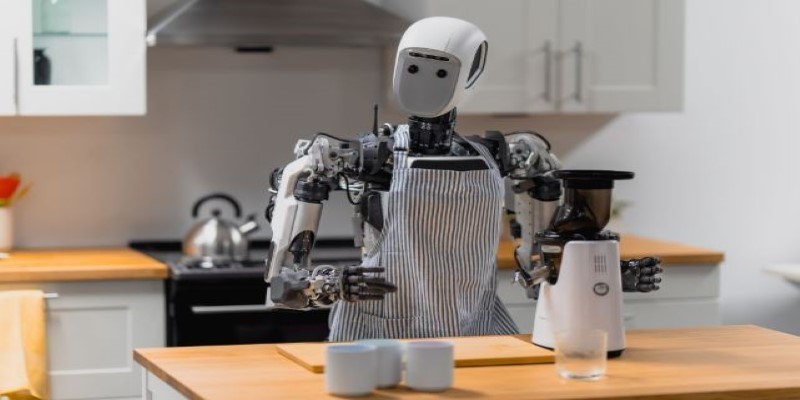
A company developing AI-powered humanoid robots has raised $350 million to scale production and refine its technology, marking a major step forward in humanoid robotics
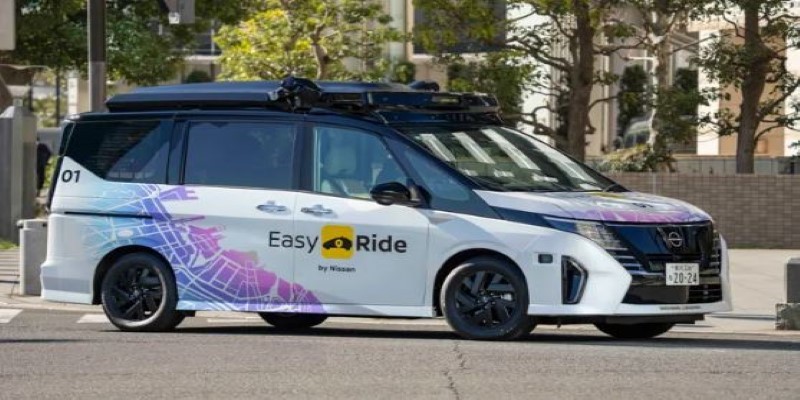
What happens when an automaker lets driverless cars loose on public roads? Nissan is testing that out in Japan with its latest AI-powered autonomous driving system

Explore the role of a Director of Machine Learning in the financial sector. Learn how machine learning is transforming risk, compliance, and decision-making in finance

Learn about landmark legal cases shaping AI copyright laws around training data and generated content.
Which data science companies are actually making a difference in 2025? These nine firms are reshaping how businesses use data—making it faster, smarter, and more useful

What happens when blockchain meets robotics? A surprising move from a blockchain firm is turning heads in the AI industry. Here's what it means

Looking for faster, more reliable builds? Accelerate 1.0.0 uses caching to cut compile times and keep outputs consistent across environments

How agentic AI is driving sophisticated cyberattacks and how the UK AI Opportunities Action Plan is shaping industry reactions to these risks and opportunities

If you want to assure long-term stability and need a cost-effective solution, then think of building your own GenAI applications